Free template · Research
Social media competitor analysis template
A competitor analysis shows how similar brands use social media, what their audience responds to and where they leave gaps. This template compares them using public numbers only (followers, posts and visible engagement) and turns what you find into actions.
Download free · no sign-up
Preview
What's inside
- A comparison sheet: followers, posts, likes, comments and shares, with engagement per post, engagement by followers and posts per week calculated
- A content review: themes, formats, tone and what their audience praises or asks for
- A summary of strengths, gaps and what you'll do differently
- Formulas that use public data only, since competitors' reach and clicks aren't visible
The columns, explained
- Brand
- You, plus three to five competitors.
- Platform
- One row per brand and platform.
- Followers
- Today's follower count.
- Posts (30 days)
- Posts published in the last 30 days.
- Likes
- Total visible likes or reactions on those posts.
- Comments
- Total visible comments.
- Shares
- Visible shares or reposts, where the platform shows them.
- Engagement per post
- Calculated: (likes + comments + shares) ÷ posts.
- Engagement by followers
- Calculated: engagement per post ÷ followers. Comparable across account sizes.
- Posts a week
- Calculated: posts × 7 ÷ 30.
- Notes
- Anything that stands out.
How to use this template
Pick three to five competitors
Direct competitors, plus one brand you admire in a neighbouring space.
Collect the public numbers
For the last 30 days on each platform: followers, posts, and the likes, comments and shares you can see.
Review their content
Themes, formats and tone, and what their audience praises or asks for in the comments.
Turn it into actions
Write down the gaps you can fill and two or three things you'll test.
Tips
- Compare engagement per post and engagement by followers. Competitors' reach and clicks aren't public, so rates based on them can't be calculated.
- Read the comments, not just the counts: that's where the audience tells you what it wants.
- Note their formats and posting times, then test them on your own account rather than copying.
- Repeat the analysis quarterly with the same competitors and period, so you can see change.
- Look for absence as much as strength. An empty platform or an unanswered question is an opportunity.
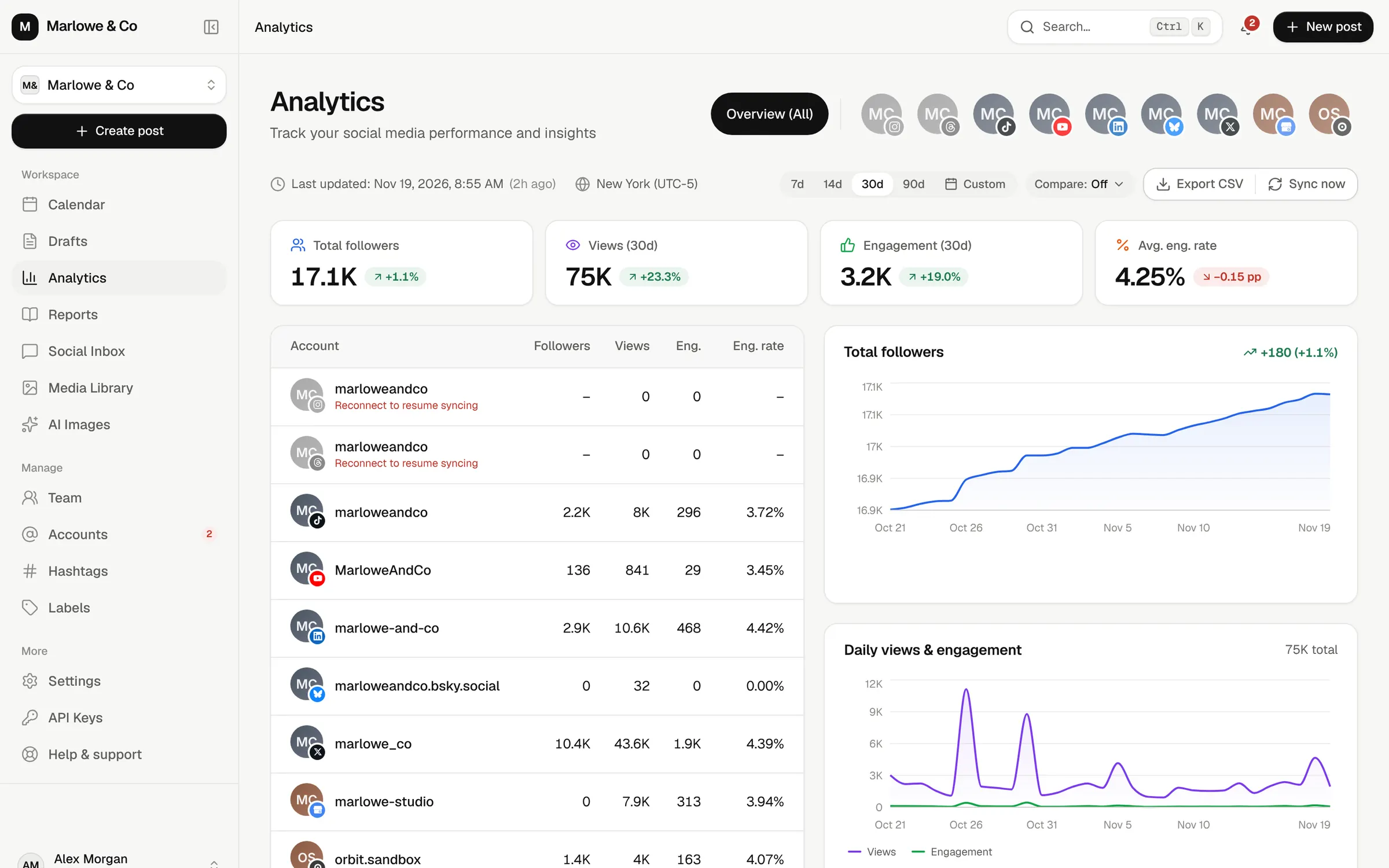
Do this automatically in HeyOrbit
Measure your own side properly in HeyOrbit
- Your own reach, impressions and engagement rate per platform, not just the public counts.
- Top posts and a best-time heatmap show what works for your audience.
- Compare any period with the previous one to see whether your tests worked.
- Plan the tests you chose on a shared content calendar.
Free to sign up. You pay $6 (₹499 in India) a month for each social account you connect, with unlimited team members. Book a call if you'd like a walkthrough.