Free template · Community
Social media crisis plan template
A social media crisis plan sets out what your team does in the first hour of a crisis, before anyone has time to think: how serious it is, who leads, what to stop, what to say first and how to keep people updated.
Download free · no sign-up
- Excel / Google SheetsXLSXFormatted, with dropdowns and formulas
- CSVCSVThe main table, for any app
- Calendar remindersICSGoogle Calendar, Outlook, Apple
Preview
What's inside
- Severity levels, so an angry comment isn't treated like a product recall (or the other way round)
- The crisis team: roles, names, backups and how to reach them
- A checklist for the first 15 minutes, the first hour and until it's resolved
- Holding statements to adapt, for the most likely situations
- A post-crisis review
- A quarterly reminder to check the contacts and run a practice
How to use this template
Define the levels
Agree what makes something an issue, an incident or a crisis, with examples from your own business.
Name the team
A lead for each role, a backup for each, and a way to reach them out of hours.
Prepare the words
Adapt the holding statements to your likely risks, and agree who approves them.
Practise
Run a 30-minute practice once a quarter with a made-up scenario, and fix what slowed you down.
Tips
- Know how to pause every scheduled post in a few minutes, and who is allowed to do it.
- Respond quickly with what you know, and say when you'll say more. Silence fills with speculation.
- Apologise for what you're responsible for, plainly. Avoid "we apologise for any inconvenience".
- Answer where the conversation is happening. A statement on your website alone isn't enough.
- Don't argue in public or delete fair criticism. Remove only what breaks your community rules, such as abuse or personal data.
Do this automatically in HeyOrbit
Act fast with HeyOrbit
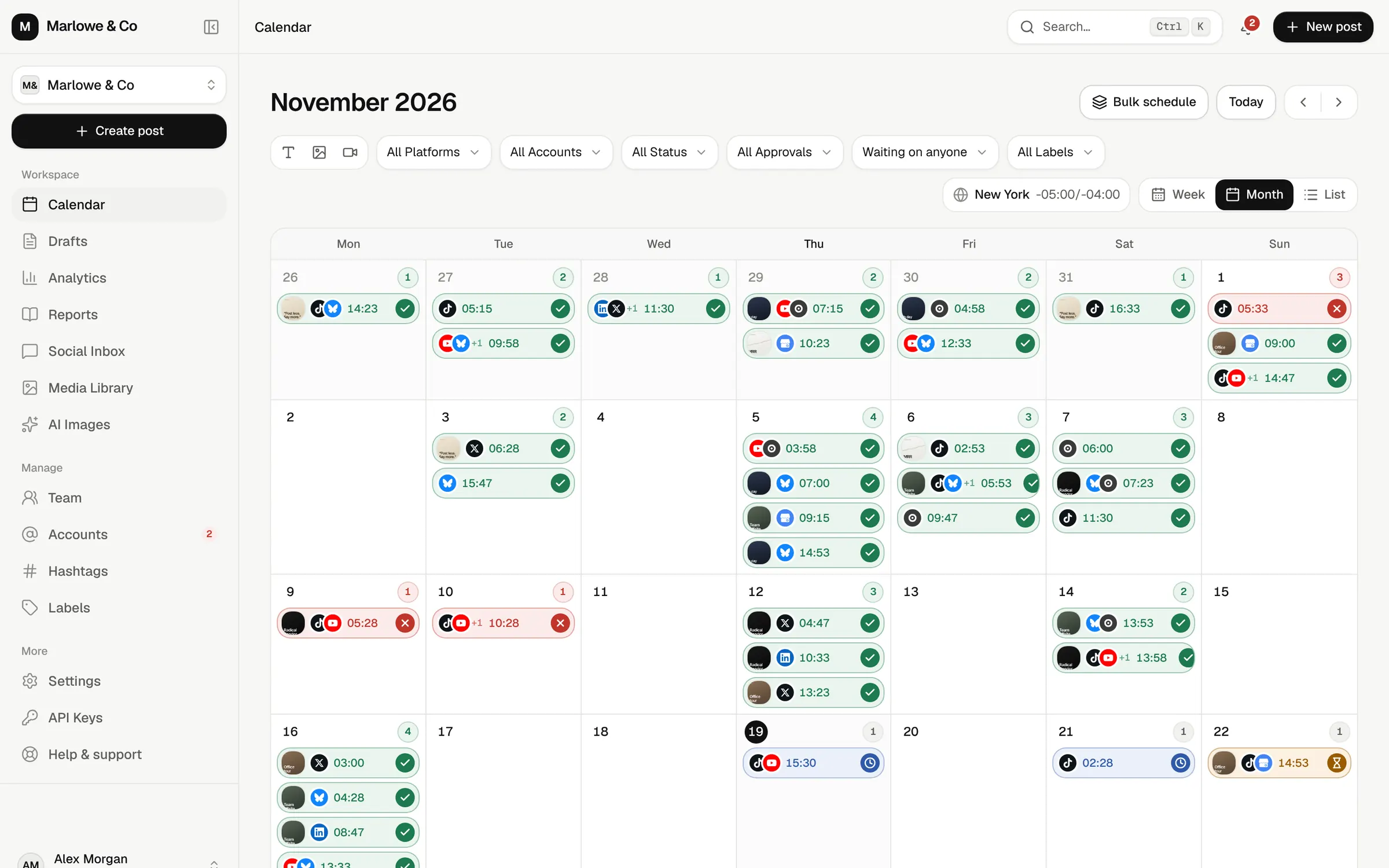
- See every scheduled post across every account on one calendar, and edit, move or delete any of them before it goes out.
- Comments, messages and reviews in one inbox, tagged by sentiment, with bulk actions when the volume spikes.
- Saved replies keep the agreed lines word for word across the team.
- Approvals with unlimited reviewers, so legal can check a statement before it's posted.
Free to sign up. You pay $6 (₹499 in India) a month for each social account you connect, with unlimited team members. Book a call if you'd like a walkthrough.